Graflex Speed Graphic
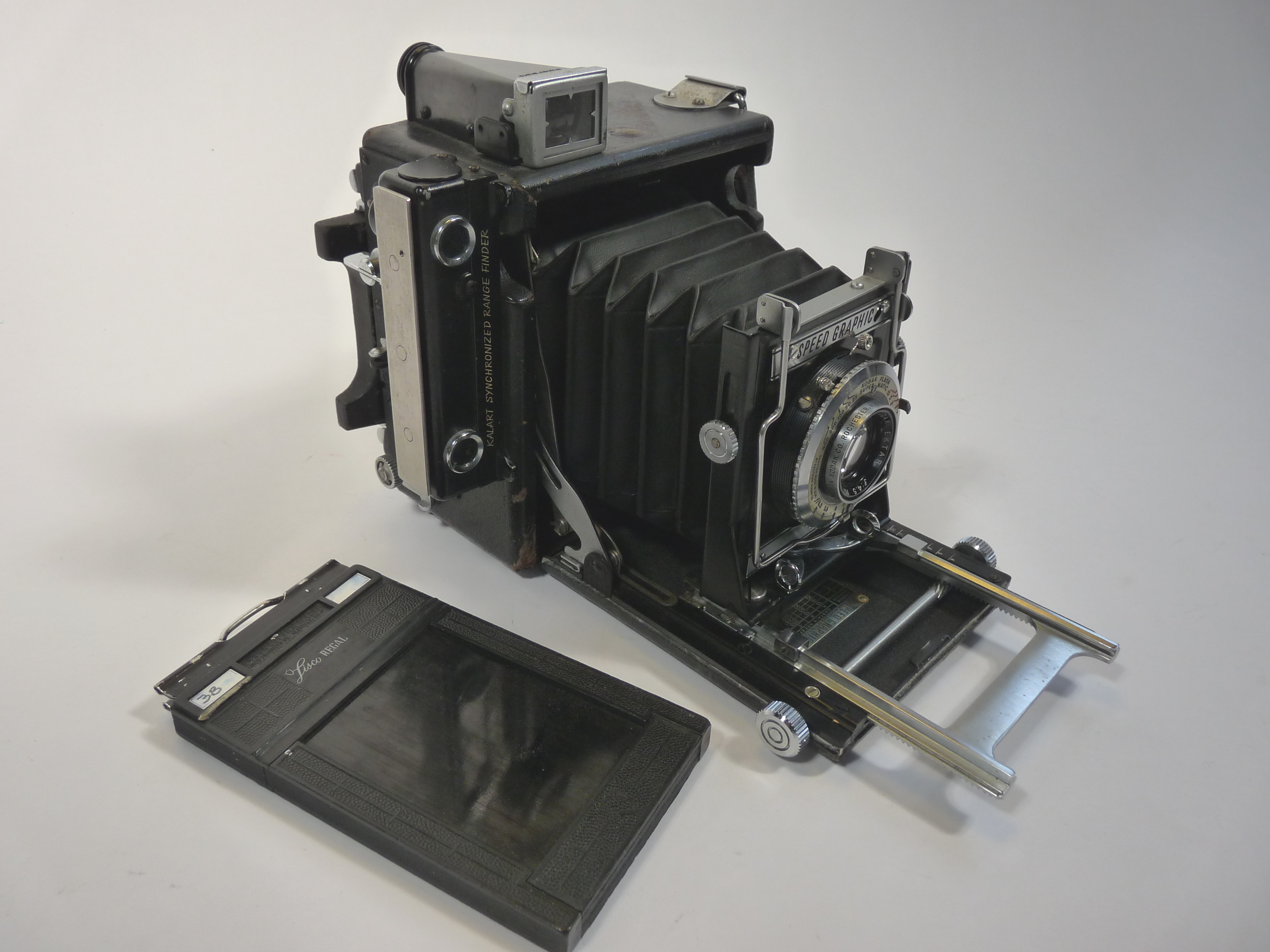
Graflex Speed Graphic is the iconic American press camera — in production 1912 through 1973 across multiple "Pacemaker" generations, with the post-WWII Pacemaker Speed Graphic (1947-1970) being the version most photographers picture when the name comes up. The Speed Graphic is distinguished from its Crown Graphic sibling by an additional focal-plane shutter behind the bellows, supplementing the in-lens leaf shutter — hence "Speed."
Key features
- 4×5 inch format (other formats made historically: 2¼×3¼, 3¼×4¼)
- Folding press camera body — drops shut for transport
- Dual shutters: in-lens leaf + body focal-plane (1/30-1/1000) — leaf shutter required for flash sync, focal-plane for fast action
- Range of front movements — front rise, fall, shift, swing, tilt (limited but functional)
- Coupled rangefinder (Kalart side-mount or Hugo Meyer top-mount on later models)
- Side-mounted Graflite or Heiland flash — the iconic press-photographer rig
Practical notes
- Speed Graphic bodies on used market: $300-700 with lens, depending on cleanliness
- The focal-plane shutter is a defining historical feature but rarely used by modern photographers — the leaf shutter is faster to operate and quieter
- Common service items: leather bellows pinholes (light-tight test before buying), focal-plane shutter curtain stiffness, rangefinder calibration
- Compatible with most LF lenses on standard Graflex lens boards (4×4 inch with cutouts for Copal 0/1/3 shutters via adapter rings)
Cultural significance
The Speed Graphic was the American newspaper camera from 1930s through 1960s — Weegee, Robert Capa during D-Day, Joe Rosenthal's Iwo Jima flag raising, and most U.S. baseball, sports, and news photography of the era was shot on a Speed Graphic. The camera's era ended when 35mm SLRs (Nikon F especially) replaced press cameras for daily journalism.
Related cameras
- Graflex Crown Graphic — same body without focal-plane shutter (lighter, simpler)
- Graflex Super Graphic — modernized successor with metal body
- Toyo 45A — Japanese folding-field-camera alternative
- Cambo SC — monorail studio alternative