Fuji Superia 400
Characteristics
- Grain: medium
- Contrast: medium
- Latitude: wide
- Formats available: 35mm
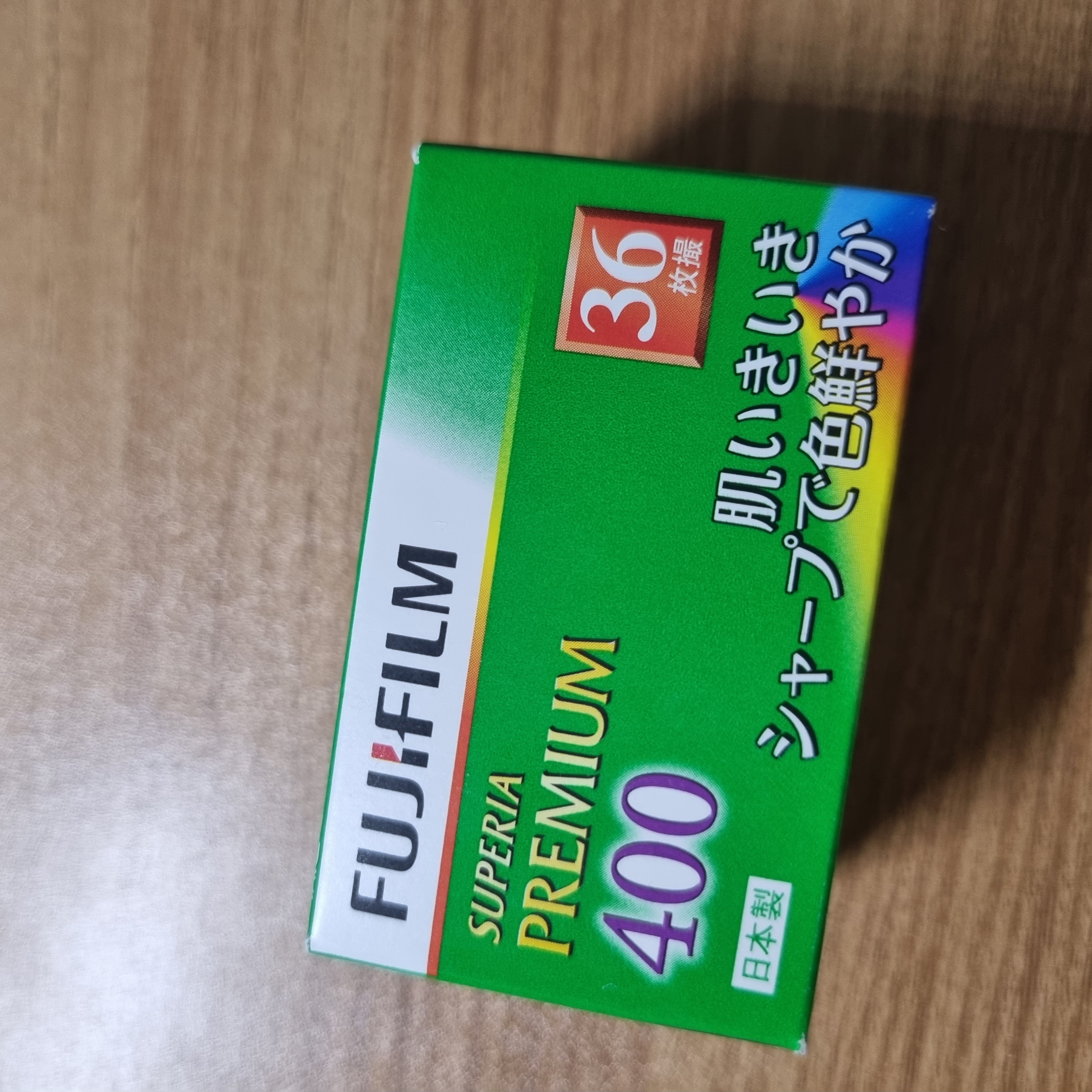
Fuji Superia 400 was Fujifilm's mass-market color negative film at ISO 400 — sold globally as the Fujicolor consumer line, distinguished from Pro 400H by lower price, slightly coarser grain, and a more saturated/contrasty palette aimed at amateur photographers shooting in mixed lighting. Superia 400 was the most-sold Fuji color negative film through the 2000s and 2010s. Discontinued in 2017 as part of Fuji's gradual film-market retreat; replaced briefly by Fujicolor 400 (a different formulation) before that too was scaled back.
Key features
- ISO 400 rated; medium grain (visibly coarser than Pro 400H)
- Saturated palette with vivid blues, greens, and warm reds
- High contrast for color negative
- C-41 process (standard)
- Wide exposure latitude (±2 stops, like all C-41 films)
- Discontinued 2017 — freezer stock + occasional retail finds
Workflow
- Forgiving exposure — Superia handles mixed lighting (open shade, overcast, indoor flash) well
- The intended use case was family snapshot photography — the saturation and contrast were tuned for engaging consumer prints
- Push processing to EI 800 is clean; EI 1600 produces visible grain but works
Practical notes
- Modern alternative: Fujicolor 400 (the 2024+ revival) is the closest current Fuji product; Kodak UltraMax 400 or Kodak Gold 200 for the Kodak-side alternatives
- Mass-market discontinuation means old packaging was ubiquitous — freezer stock and even unrefrigerated late-expiry rolls can be found in many household drawers
- Available historically in 35mm only (no 120 or sheet)
- Superia X-TRA 400 was the same formulation under a slightly different brand name
Related films
- Fuji Pro 400H — discontinued professional Fuji 400 alternative
- Kodak UltraMax 400 — current consumer 400-speed C-41 alternative
- Kodak Gold 200 — slower current consumer Kodak alternative
- Kodak Portra 400 — professional Kodak 400-speed alternative