Kodak Ektachrome E100
Characteristics
- Grain: fine
- Contrast: medium
- Latitude: moderate
- Formats available: 35mm, 120, 4x5
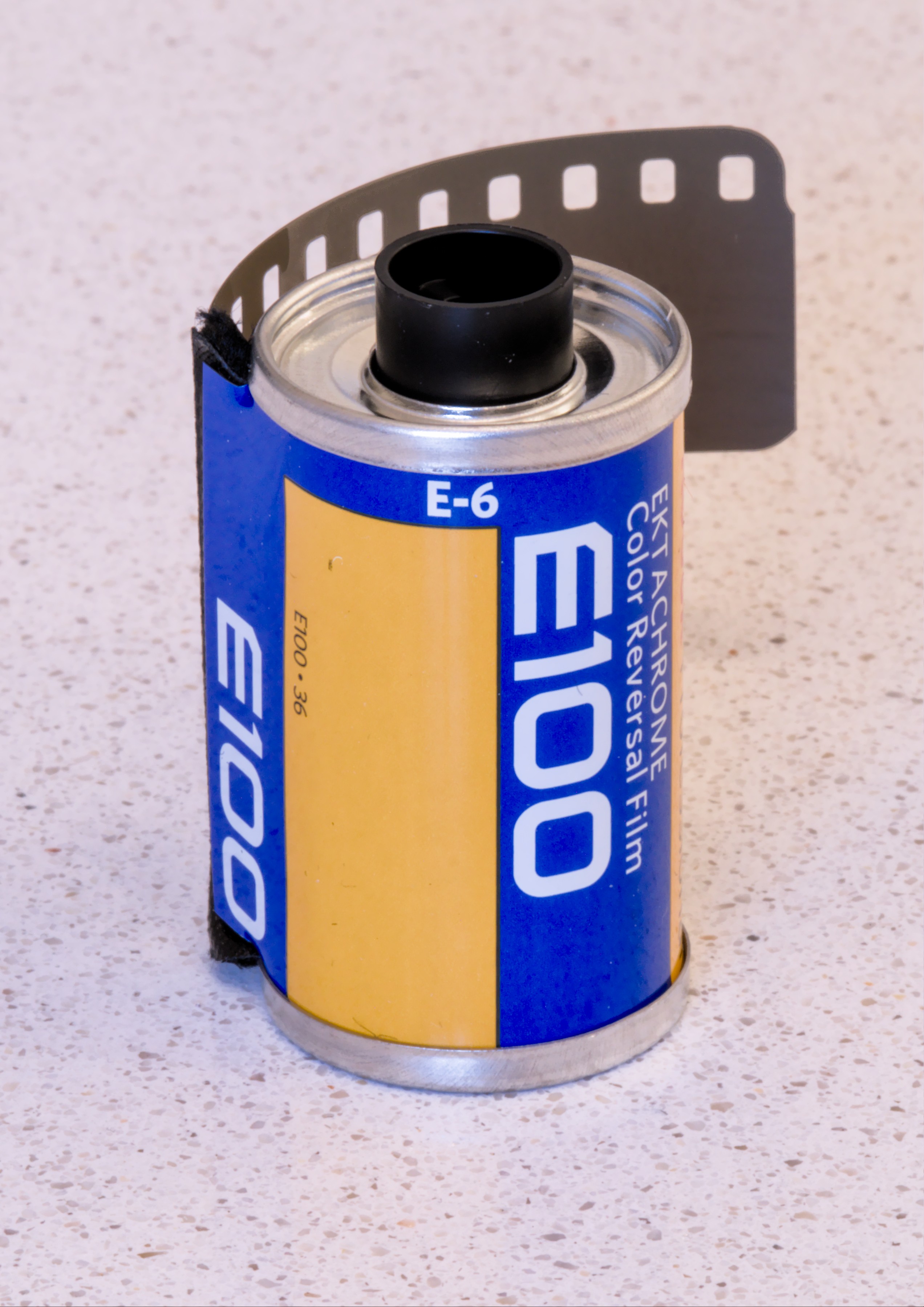
Kodak Ektachrome E100 is Kodak's color reversal (slide) film at ISO 100 — reintroduced in 2018 after a 6-year discontinuation in response to community demand. Ektachrome E100 is the closest Kodak counterpart to Fuji Provia 100F: naturalistic palette, fine grain, balanced color rendering. The reintroduction was a major event in the slide-film community as Kodak's first film-product reintroduction in years.
Key features
- ISO 100 rated; fine grain (RMS 8)
- Naturalistic palette — neither Velvia-saturated nor Astia-soft; sits in the middle
- E-6 process
- Wide latitude for slide film (~±1 stop)
- Available in 35mm, 120, and 4×5 sheet in current production
- Reintroduced 2018 after 2012 discontinuation
Workflow
- Standard slide-film exposure: meter highlights, accept narrow shadow latitude
- For maximum tonal range, slight overexposure (~¼ stop) — Ektachrome E100 handles overexposure better than Velvia
- Pull processing to EI 50 extends shadow detail for high-contrast scenes
- Push processing to EI 200 is clean; EI 400 produces visible shifts
Practical notes
- Ektachrome E100 is Kodak's only current color reversal film — Kodachrome was discontinued 2009, the older Ektachromes through 2012
- The 2018 reintroduction was based on Kodak's modernized E-6 emulsion technology — slightly different palette from the 2012-discontinued formulation
- Skin tones render naturally; landscape colors are vivid but not overdone
- Available in 35mm, 120, and 4×5 sheet — Kodak's only current sheet color reversal film
- Cold storage extends shelf life
Related films
- Fuji Provia 100F — Fuji naturalistic slide alternative
- Fuji Velvia 50 — Fuji saturated slide alternative
- Fuji Astia 100F — discontinued Fuji portrait-optimized slide
- Kodak Kodachrome 64 — discontinued historical Kodak slide
- Kodak Kodachrome 200 — discontinued faster Kodachrome variant