Kodak Kodachrome 200
Characteristics
- Grain: medium
- Contrast: high
- Latitude: narrow
- Formats available: 35mm
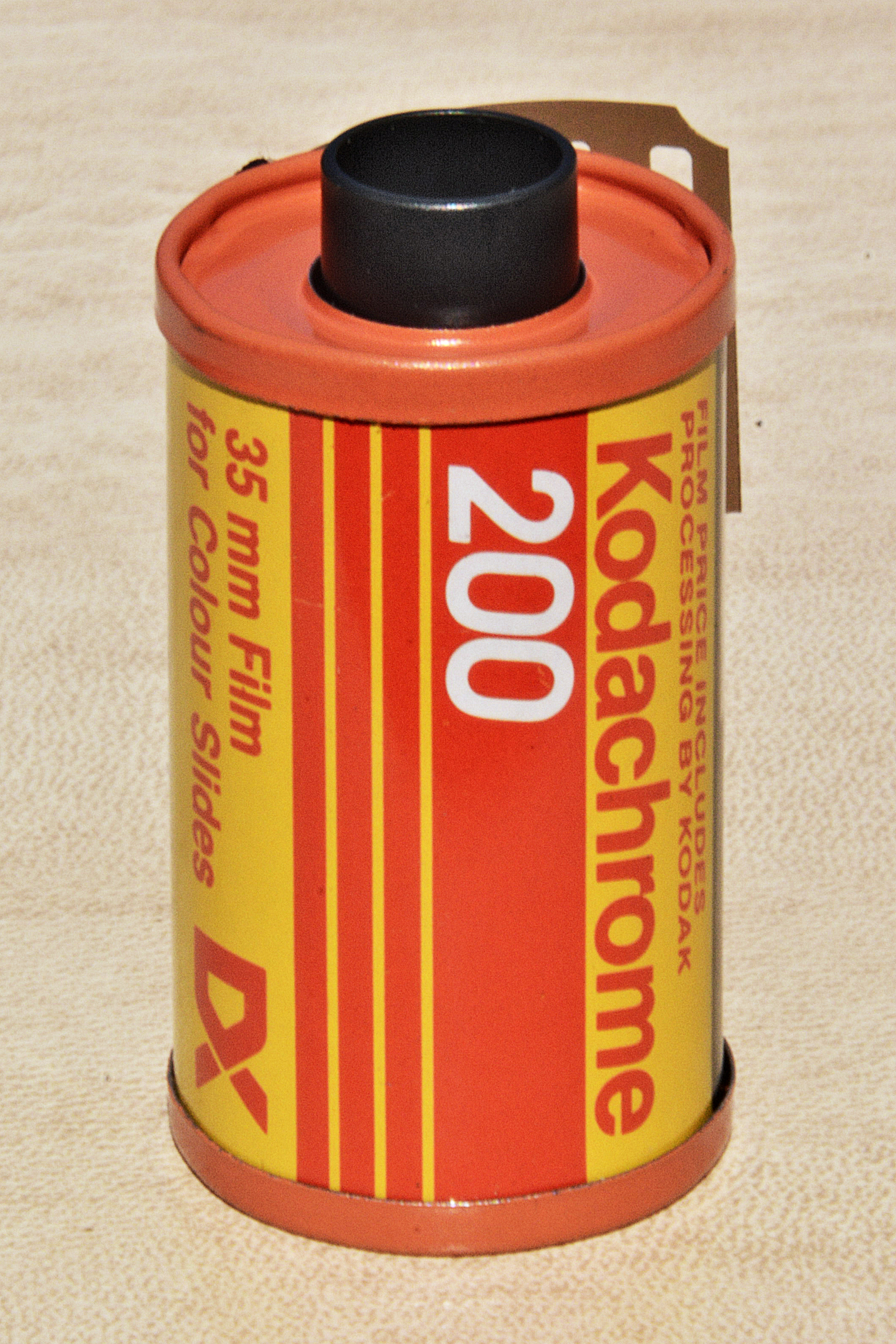
Kodak Kodachrome 200 was the fastest Kodachrome variant — the high-speed sibling of Kodachrome 25 and Kodachrome 64 in Kodak's discontinued K-14-process color reversal family. Kodachrome 200 was introduced in 1987 to compete with E-6 high-speed slide films and was the choice for low-light slide photography that needed Kodachrome's unique color science. Discontinued in 2007 alongside the rest of the Kodachrome family; K-14 process discontinued globally in December 2010 when Dwayne's Photo (Parsons, Kansas — the world's last K-14 lab) processed its final roll.
Key features
- ISO 200 rated; medium grain (coarser than Kodachrome 64; finer than equivalent E-6 push of slower films)
- Distinctive Kodachrome palette — warm reds, slightly cyan-shifted shadows, the "National Geographic look"
- K-14 process — required Kodak's proprietary lab equipment; cannot be home-developed
- Discontinued 2007 + K-14 process worldwide cessation December 2010
- Available historically in 35mm only
Workflow
- No longer processable in color — K-14 is gone globally as of December 30, 2010
- B&W processing only — surviving Kodachrome 200 rolls can be developed as black-and-white in standard B&W chemistry, producing usable B&W negatives (the silver image is recoverable; the dye-coupling is not)
- For freezer-stock photographers: expose at EI 200 and develop in HC-110 or D-76 for a B&W image
Practical notes
- Kodachrome 200 is unrecoverable as a color image — even the most well-preserved freezer roll cannot be processed in color
- The B&W-only fallback is a documented workflow but produces neither Kodachrome's character nor good B&W tonality — most photographers consider freezer-stock Kodachrome better used as a "shot-and-archived" novelty than a working medium
- Existing developed Kodachrome slides remain viewable and scannable; the slides themselves are remarkably permanent (60-year-old Kodachromes still hold color)
- Steve McCurry's "Afghan Girl" was shot on Kodachrome (ISO 64, not 200, but same family)
Related films
- Kodak Kodachrome 64 — slower Kodachrome sibling; same K-14 process and disposition
- Kodak Ektachrome E100 — current Kodak slide alternative (E-6 process)
- Fuji Provia 100F — current naturalistic slide alternative
- Fuji Velvia 50 — current saturated slide alternative