Kodak T-Max 400
Characteristics
- Grain: fine
- Contrast: medium
- Latitude: wide
- Formats available: 35mm, 120, 4x5
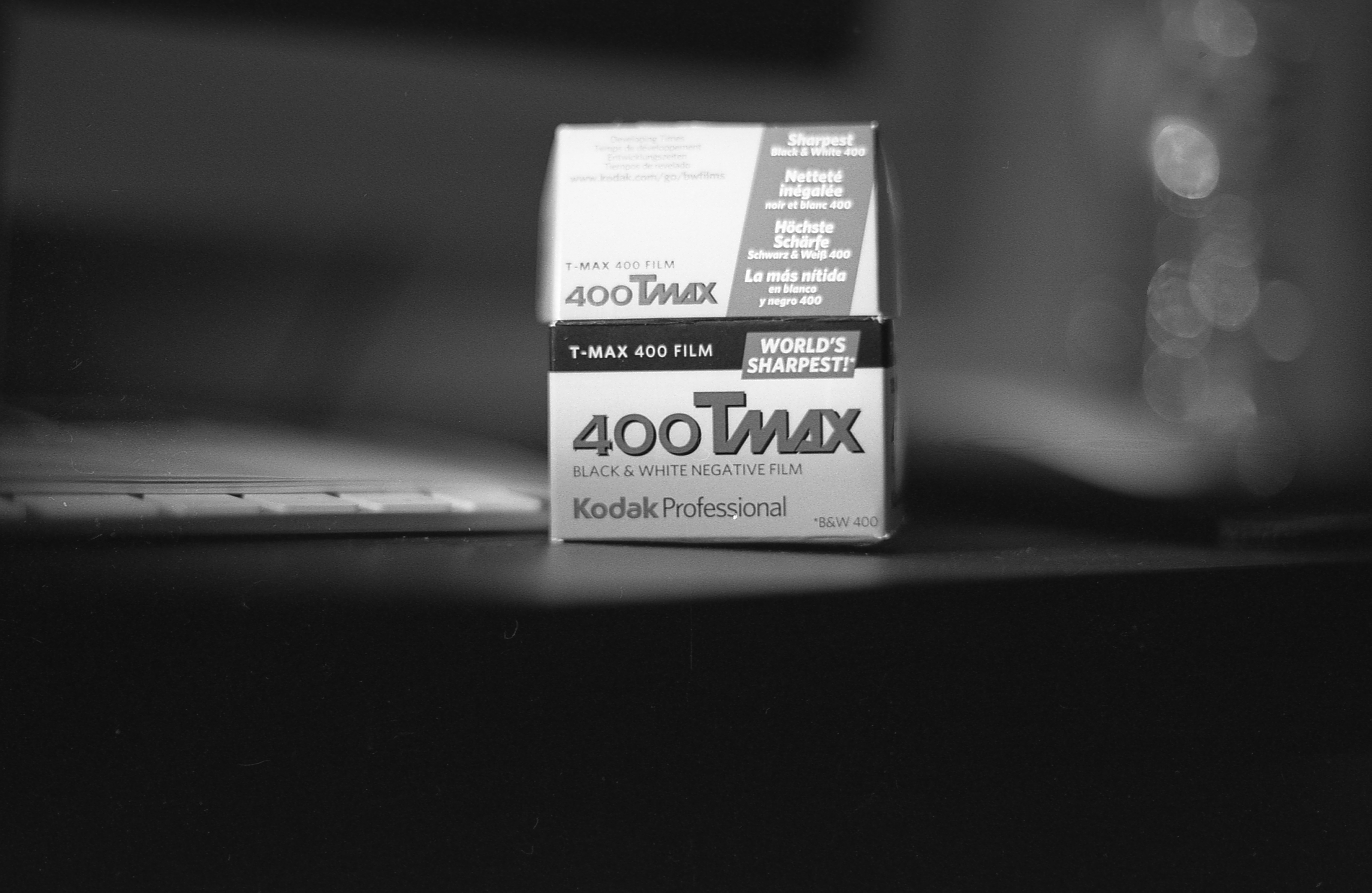
Kodak T-Max 400 is Kodak's fine-grain T-grain B&W film at ISO 400 — the modern alternative to Tri-X with finer grain at the same speed. T-Max 400 was introduced in 1986 (reformulated 2007 as "T-Max 400 New") and remains Kodak's flagship medium-fast B&W film alongside Tri-X.
Key features
- ISO 400 rated; fine T-grain (RMS 10 — visibly finer than Tri-X's cubic grain at the same speed)
- Cool-neutral palette — Tri-X is warm, T-Max 400 is neutral
- Better reciprocity than Tri-X (p ≈ 1.1 vs Tri-X's ~1.3)
- Excellent push tolerance — clean to EI 800-1600
- Available in 35mm, 120, 4×5, 8×10 sheet
- Compatible with most developers — XTOL (Kodak-recommended), D-76, HC-110, Microphen, T-Max RS
Workflow
- Box-speed development: XTOL stock at 7:30, D-76 1:1 at 11 min, HC-110 Dil B at 6 min
- Push to EI 800: D-76 stock at 10 min, or T-Max RS at the published push time
- Push to EI 1600: extended development; Microphen is the cleanest result
- Pull to EI 200 in dilute developer
Practical notes
- T-Max 400 vs Tri-X: same use cases, different aesthetic. T-Max 400 = finer grain + neutral tone; Tri-X = coarser grain + warm tone + structural grain character. Many photographers stock both.
- Available in 4×5 + 8×10 sheet — alongside Tri-X, the only current Kodak fast B&W films in sheet
- Cold storage extends shelf life
- Push aesthetic differs from Tri-X — T-Max 400 at EI 1600 looks "modern grainy"; Tri-X at EI 1600 looks "documentary classic"
Related films
- Kodak Tri-X 400 — Kodak cubic-grain alternative at same speed
- Kodak T-Max 100 — Kodak T-grain sibling at slower speed
- Kodak T-Max P3200 — Kodak T-grain sibling at high speed
- Ilford Delta 400 — Ilford T-grain alternative
- Ilford HP5 Plus 400 — Ilford cubic-grain alternative